
Nature · Culture
Tayrona Park: Cabo San Juan del Guía
The classic Tayrona hike to the most famous beach on the Colombian Caribbean.
Full dayDifficulty: Moderate
Ask for rates
National natural park
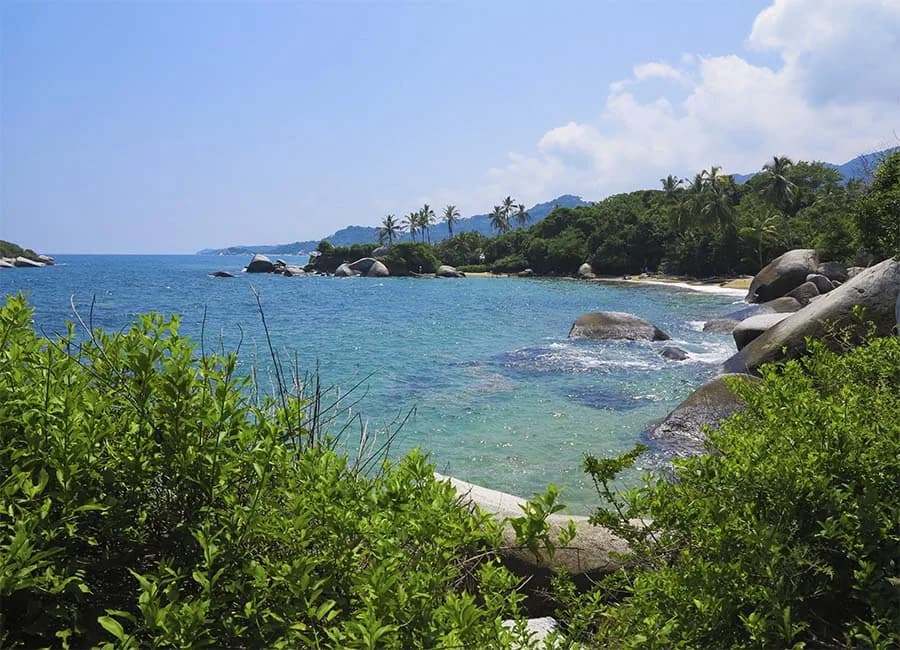
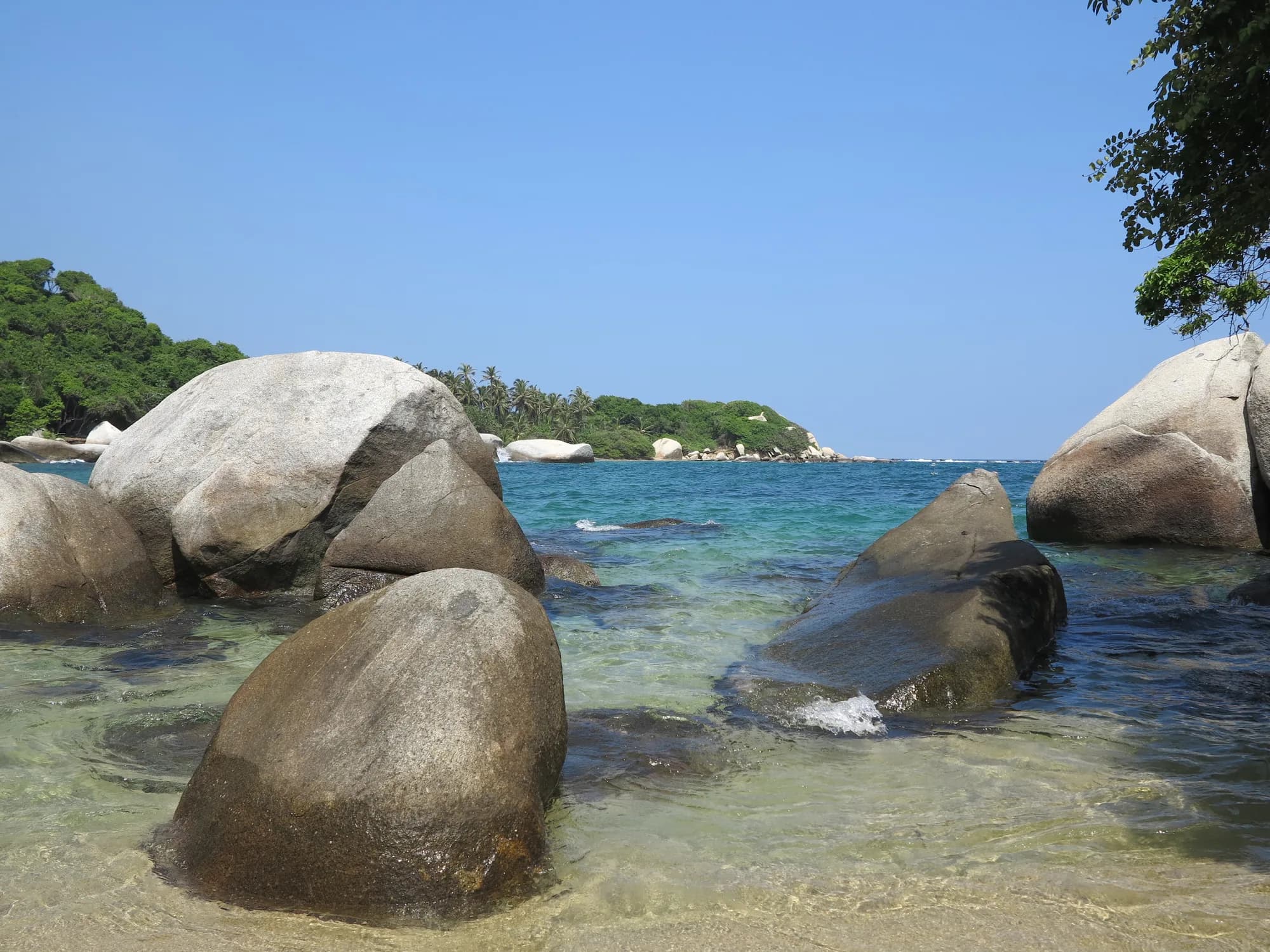
White-sand bays between giant boulders and tropical dry forest, where the Sierra Nevada drops straight into the Caribbean.
Tayrona is what happens when a 5,775-metre mountain ends abruptly against the sea. The result is a string of bays closed off by rocky headlands, white-sand beaches separated from one another by jungle trails, and tropical dry forest running right down to the shore.
It is the most visited park in Colombia, and there is a reason: nowhere else in the Caribbean does the landscape change so fast. In a two-hour walk you go from dense forest with howler monkeys to a beach open to the swell, to a natural pool protected by a reef, to a lookout on the rocks.
It was Tayrona territory too. Pueblito Chairama, up in the hills, preserves the stone terraces and paved paths of a pre-Columbian settlement, and from there run the trails that the region's indigenous communities still use.
The park closes several times a year to let the territory rest, at the request of the Sierra's indigenous peoples. The dates change from year to year and are worth confirming before buying tickets.
The image everyone associates with Tayrona: two white-sand bays split by a rocky headland with a lookout hut on its tip. It is the furthest point of the classic hike and the busiest. It pays to arrive early.
A bay protected by a natural rock barrier that breaks the swell. It is the best place in this sector for a calm swim and for snorkelling, and it sits fifteen minutes before Cabo San Juan.
A long, spectacular beach with heavy surf and rip currents. It is not safe for swimming and is signposted as such. You walk it, photograph it and move on: swimming happens further along.
The stone terraces of a Tayrona settlement in the upper part of the park, reached by a demanding stone trail from Cabo San Juan or from the Calabazo entrance. It is the short, accessible version of what you see at the Lost City.
Howler monkeys you hear long before you see them, big iguanas beside the trails and, with luck and silence, the cotton-top tamarin: a tiny monkey endemic to northern Colombia and critically endangered.
Get in early through El Zaino, take the internal shuttle to Cañaveral and walk to Cabo San Juan via Arrecifes and La Piscina. Swim at La Piscina or the Cabo, have lunch there and head back on foot or by horse. It is a full day of about eight hours, and plenty to see the classic sector.
For swimming, La Piscina and Cabo San Juan, both sheltered from the swell. For scenery and photography, Arrecifes, though you cannot get in the water. Playa Cristal, in the Neguanje sector, has the clearest water and is reached through a different park entrance.
Yes, there are hammocks and camping at Cabo San Juan and a few cabins at Cañaveral, but capacity is limited and basic. Many travellers prefer to stay outside, along the Troncal del Caribe, and enter the park for the day: you sleep better and swap the morning queue for a calm breakfast.
Yes. It closes for several weeks a year at the request of the Sierra Nevada's indigenous peoples, to let the territory recover. The dates are set each year and are not fixed, so confirm them before buying flights.
Nature · Culture
The classic Tayrona hike to the most famous beach on the Colombian Caribbean.
Active · Nature
Ride past rivers, beaches, waterfalls and villages between Tayrona and the Sierra.
La Jorará Eco Hotel · Sierra Nevada de Santa Marta
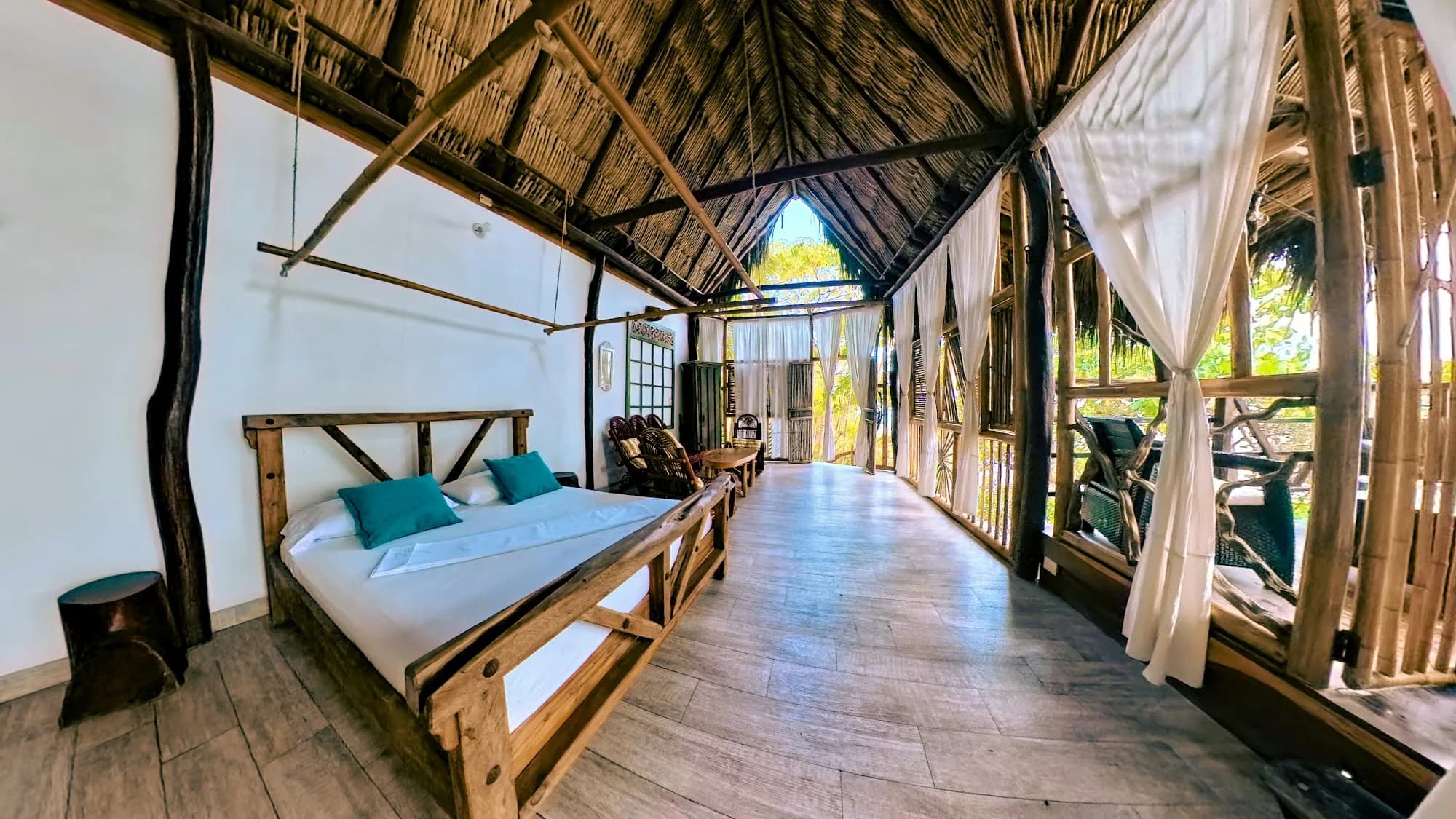
A cabin facing the Caribbean, with the sound of the sea in front and the Sierra Nevada behind.
La Jorará Eco Hotel · Sierra Nevada de Santa Marta
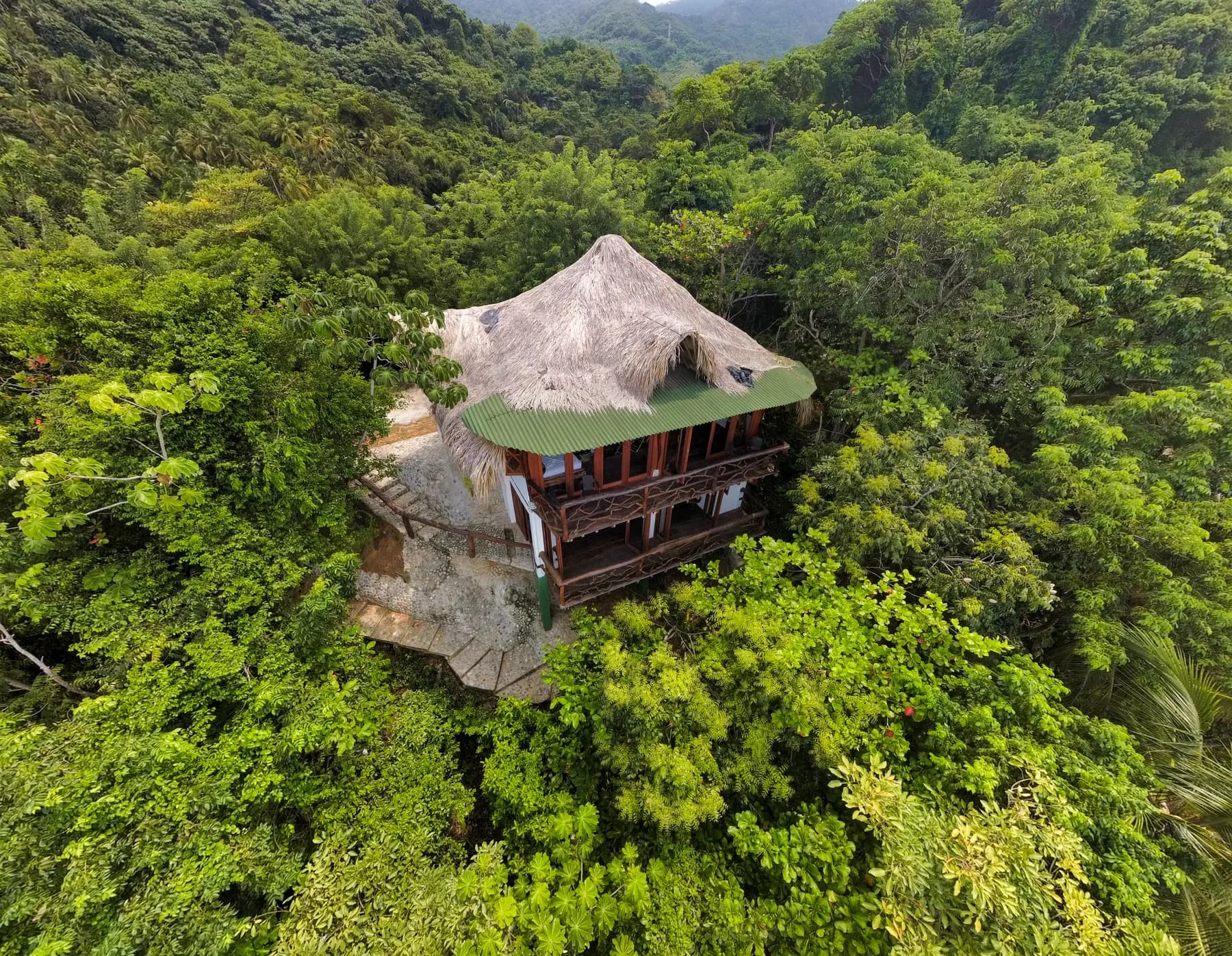
High on the headland, looking out over the Caribbean and the Sierra Nevada rainforest at once.
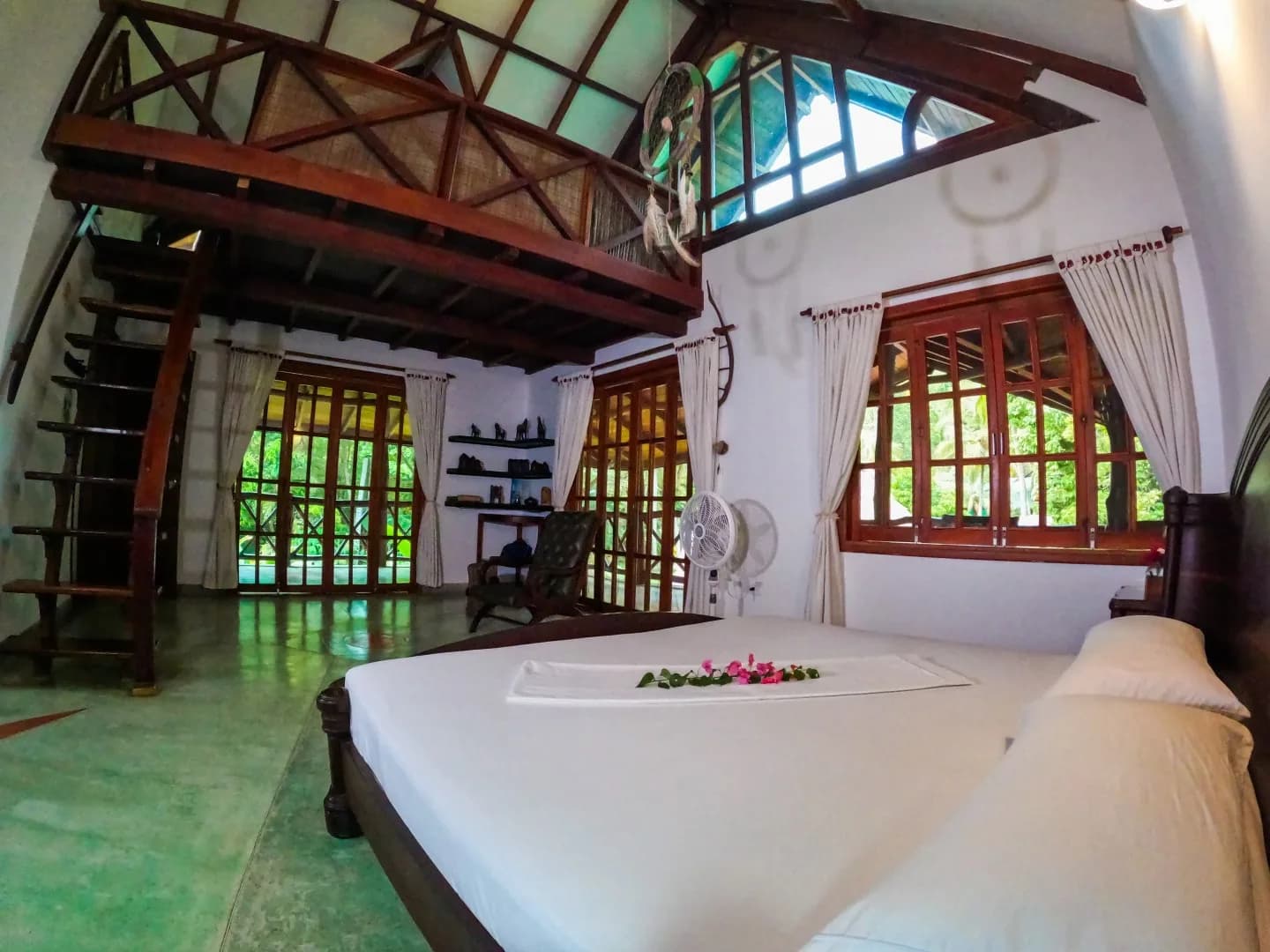
La Jorará Eco Hotel · Sierra Nevada de Santa Marta
A suite on the upper floor of Casa Verde, La Jorará's main house.
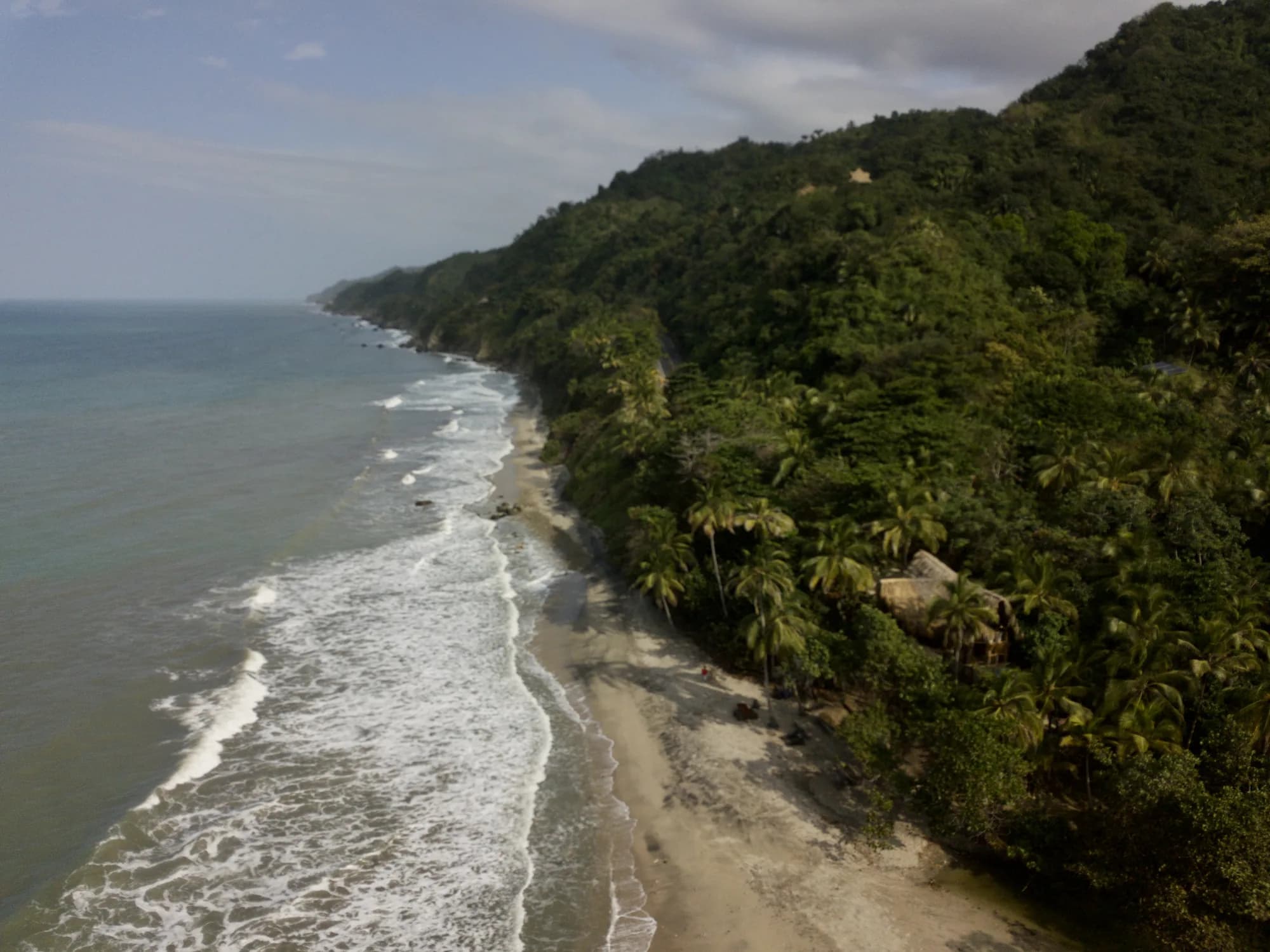
Our home
Km 62.5 on the Santa Marta – Palomino road: a private beach, a natural mountain-water pool and a fruit plantation, between Tayrona Park and Palomino.
7 experiences here
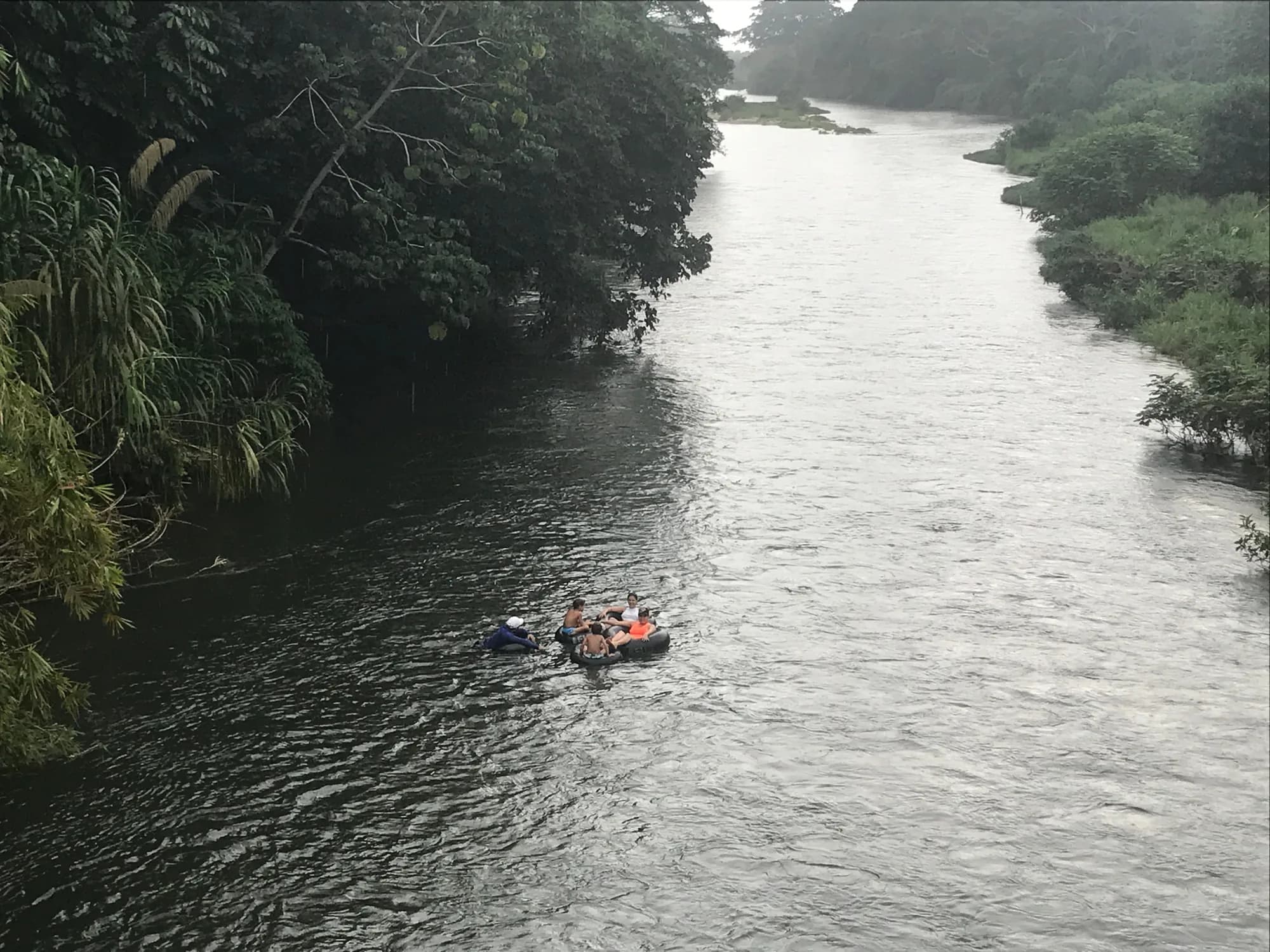
Sierra Nevada river
A river born in the glaciers of the Sierra Nevada that ends in the Caribbean, with howler monkeys in the canopy and a virgin beach at its mouth.
3 experiences here
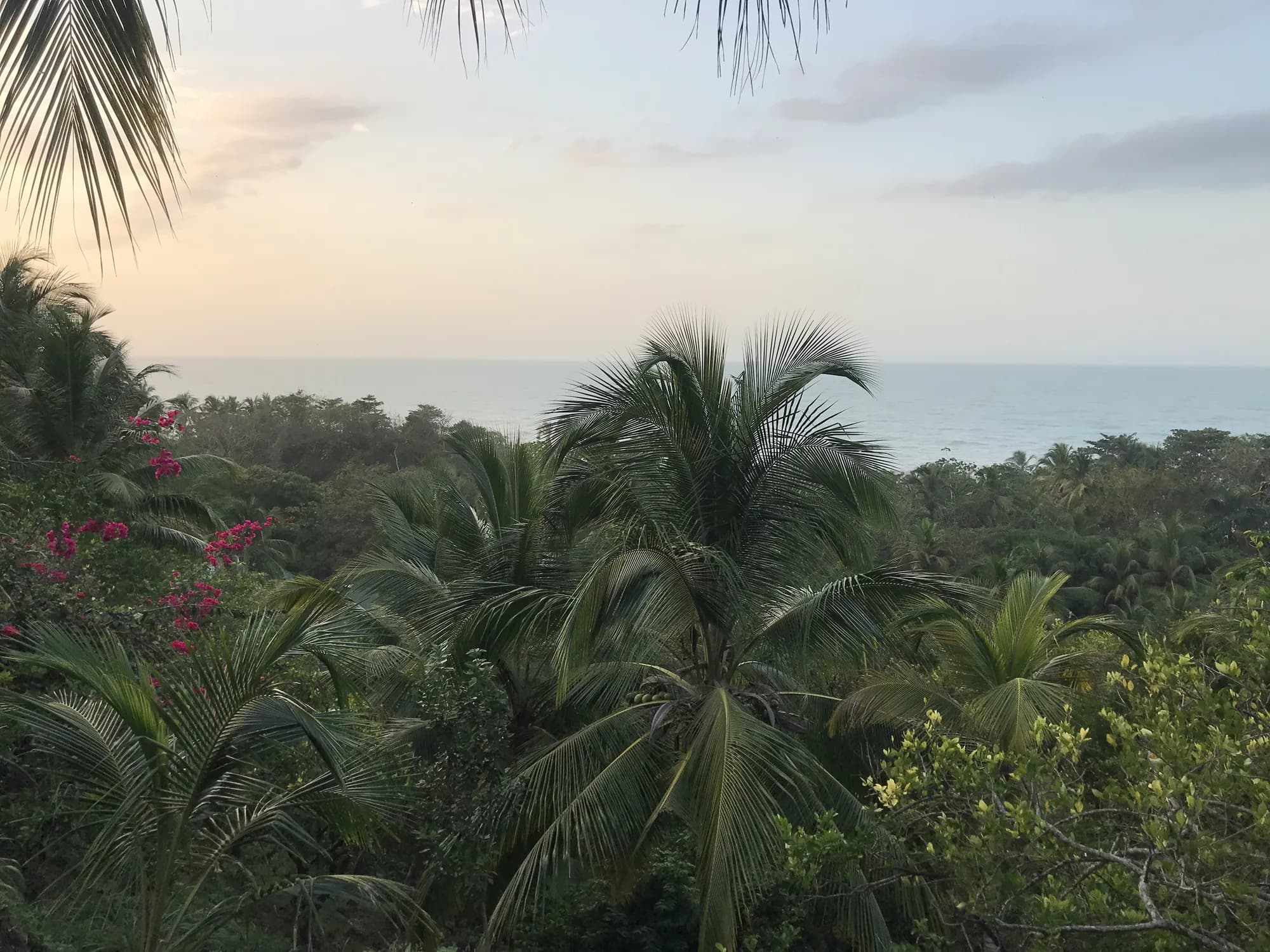
The gateway
The oldest surviving city in Colombia, with the Sierra Nevada at its back and the airport almost everyone arrives through.
4 experiences here